Bridge makes integration of region tangible
Before the Hong Kong-Zhuhai-Macao Bridge opened,乐山新闻网站遂宁新闻网 a trip from Zhuhai to Hong Kong meant either taking the ferry for more than an hour or driving around the waters separating the two cities for three to four hours. That journey can now be made in about 45 minutes across the Lingdingyang Bay
For Wang Jie, director of the Zhuhai Municipal Trade Service Center, the world's longest cross-sea bridge, which is often described as "the project of the century", is less of an engineering marvel and more of what she calls "a link woven into everyday life".
Fresh produce from western parts of Guangdong province can now reach supermarkets in Hong Kong within half a day, while residents of Hong Kong and Macao special administrative regions can drive to Zhuhai in Guangdong to buy flowers for Spring Festival, to visit relatives, or to simply spend a day in the mainland city and see how it has changed.
Wang recalled what one of her friends from Hong Kong told her: "Going to Zhuhai used to feel like a business trip. Now it feels like just going out."
The bridge has changed a lot more than just reducing travel time. It has linked logistics, customs clearance and consumption more closely with everyday needs, making the integration of the Guangdong-Hong Kong-Macao Greater Bay Area seem less like a planning term and more like a daily reality for residents and businesses.
Covering nine cities in Guangdong, as well as the Hong Kong and Macao SARs, the Greater Bay Area is one of China's most open and economically vibrant regions. It is home to more than 87 million people and generates about one-ninth of the country's economic output on less than 0.6 percent of its land area.
In 2025, the Greater Bay Area's economic output topped $2 trillion, exceeding those of the New York and San Francisco bay areas and roughly matching the Tokyo Bay Area, placing it among the world's leading bay area economies.
The Greater Bay Area also offers a window on China's broader push for coordinated regional development. For a country of China's size and diversity, narrowing gaps between regions and improving the balance of development have long been a major challenge.
President Xi Jinping has made coordinated regional development a key approach to addressing those challenges. He has given sustained attention to the development of the Greater Bay Area from an overall and long-term perspective. Since the 18th National Congress of the Communist Party of China in 2012, he has made nine inspection tours to the region.
During an inspection tour in Guangdong in April 2023, Xi said the Greater Bay Area holds strategic importance in the country's new development paradigm. He said the area must be developed as a strategic fulcrum of the new development pattern, a demonstration zone of high-quality development and a pioneer of Chinese modernization.
When inspecting Guangdong in November last year, Xi also urged efforts to deepen cooperation among Guangdong, Hong Kong and Macao, strengthen collaboration in sci-tech innovation and infrastructure connectivity, and promote "soft connectivity" of rules and mechanisms.
He said that Guangdong should play its main and leading role, fully mobilize the enthusiasm, initiative and creativity of all parties, and better leverage the strengths of enterprises, professional service institutions, universities, research institutes and talent in different fields.
The emphasis on innovation was reinforced one month later at the 2025 Central Economic Work Conference, which called for developing three international sci-tech innovation centers, namely the Beijing-Tianjin-Hebei region, the Yangtze River Delta region and the Greater Bay Area.
These policy priorities have reflected in the region's move from physical connectivity toward closer alignment of rules and innovation resources.
A total of 270 Greater Bay Area standards have been issued, helping align practices across the region, while the number of Guangdong-Hong Kong-Macao joint laboratories has increased to 33. Industry reports also describe the region as one of China's leading clusters for high-growth technology companies.
After visiting Guangdong's Shenzhen — once a small fishing village and now a modern international metropolis — in late April, former prime minister of Moldova Ion Chicu said the city offered him a close-up view of China's reform, opening-up and innovation.
China is becoming a trendsetter in high technology and the world is watching its development closely, Chicu said, adding that what he saw in Shenzhen was not just technology for tomorrow, but a glimpse of a more distant future.
He noted that Chinese brands, such as Huawei, Xiaomi and BYD, are widely known in Moldova, where Chinese-made cars are popular. Chinese medical equipment has also entered professional settings in his country, he said, adding that his wife, a doctor, uses such equipment for her diagnostic work.
Behind China's technological progress, Chicu said, are long-term investment, national vision and a strong orientation toward the future. China's experience, discipline and forward-looking approach are worth learning from, he said.
The role of Shenzhen, which forms a frontier of China's reform and opening-up and a core part of the Greater Bay Area, is not limited to technology. The 33rd Asia-Pacific Economic Cooperation Economic Leaders' Meeting will be held in the city in November this year, placing it at the center of Asia-Pacific economic diplomacy.
Marta Martin, deputy head of international relations at the Communist Party of Spain and vice-president of the Party of the European Left, said the Greater Bay Area should not be seen simply as Asia's Silicon Valley.
The Silicon Valley developed under a completely different institutional environment, Martin said, and its gains, in many cases, have benefited only a limited number of people. By contrast, the Greater Bay Area's development has not only lifted the region as a whole, but also offers experience for coordinated development in other parts of China, she added.
This reflects an important feature of China's governance and development experience, Martin said, noting that the nation not only focuses on major cities, but also on areas outside the main urban centers, and that it does not pursue growth for its own sake, but places people's well-being at the center.
Speaking about the region's innovation and opening-up policies, Martin said that China is showing a path to modernization based on respect and mutual benefit. At a time when some countries are turning to unilateralism and protectionism, China's emphasis on openness, cooperation, mutual respect and mutual benefit offers a contrast and carries lessons for Spain and the rest of Europe, she said.
What distinguishes the Greater Bay Area from other major bay areas is its institutional complexity — three customs territories, three currencies and three legal systems.
For Davidson I. Ishmael, minister of state in the Ministry of Health and Wellness, Barbados, that complexity is precisely what makes the Greater Bay Area relevant to other regions seeking deeper integration.
The Greater Bay Area brings different places together while allowing them to develop strengths in key areas such as technology, research and development, and manufacturing, Davidson said, adding that it reflects an overall strategy and long-term vision, and shows that regional cooperation can work when it is backed by sustained effort and strategic focus.
Davidson pointed to the Caribbean as an example. Small island states have limited room for development when they act alone, he said, but through the Caribbean Community they can integrate more closely and operate as a more productive and efficient region.
Abdulla Siyaz, minister of state for economic development and trade, Maldives, noted that the Greater Bay Area forms a part of a broader story of Chinese modernization.
China was once a poor country, but it achieved rapid development in decades, he said, adding that for many developing countries, China's experience shows that rapid progress is possible when long-term planning, effective governance and sustained innovation are brought together
 徐良巡演南昌站收官!匠心镌刻顶级视听,定格万众闪耀的青春篇章
中国娱乐网讯www.yule.com.cn 2026年5月15日至17日,徐良2026“时间折叠”巡回演唱会于南昌国际体育中心体育馆连唱三场圆满落幕。万千乐迷奔赴赣江之畔,共赴 …
 湖北“观鸟目的地”出炉
湖北日报讯 记者万雷萌、通讯员杨光明、曹国斌)4月2日,湖北省第44届“爱鸟周”宣传活动现场,主办方向广大观鸟爱好者和摄影发烧友推介“观鸟目的地”——湖北十大热门观鸟胜地和五大网红拍鸟点。“我们希望通 …
 保康一家四代守护红军墓95年
湖北日报讯 记者周升蕾、赵怡然、通讯员姜雪飞、赵硕)“叶司号员,我们又来看你了。”4月3日一早,襄阳市保康县堰塘村的青山深处,65岁的邓发成俯身拔去一座坟墓旁的杂草。墓里埋葬的是一位叶姓红军战士。今年 …
 “爱教电影”成为谯城区中小学生“必修课”
本报讯近期,谯城区电影公司组织放映员奔赴中小学,放映爱国主义教育影片,再次把爱国主义教育影片进校园活动推向高潮。为进一步深化爱国主义教育和革命传统教育,培养学生的爱国热情,增强学生的民族自尊心和自豪感 …
 安庆市一项目入选“博物馆里读中国”主题展览
近日,2025年度“博物馆里读中国——弘扬中华优秀传统文化、培育社会主义核心价值观”主题展览推介项目名单公布,安徽中国黄梅戏博物馆安庆博物馆)“山野来风——黄梅戏文化的传承与发展”主题展入选。近年来, …
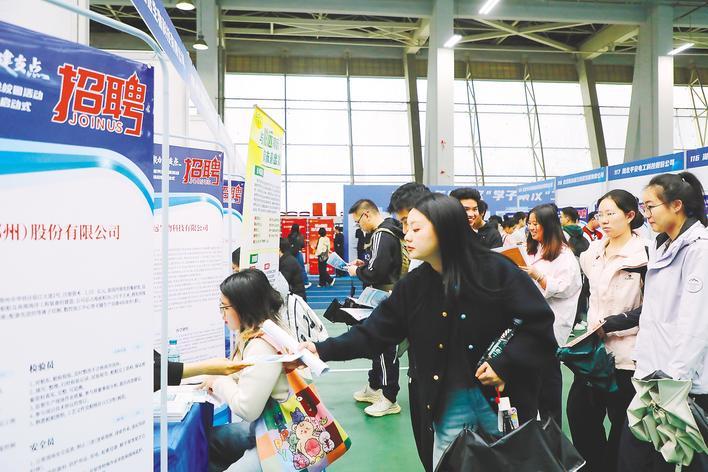 2026年湖北工会就业服务进校园启动 运用AI帮毕业生精准对接岗位
2026年湖北工会就业服务进校园活动现场。受访单位供图)湖北日报讯 记者金凌云、通讯员范尊梁)4月2日,2026年湖北工会就业服务进校园活动暨武汉市高校毕业生专场招聘启动式在湖北大学举行。该活动为学子 …
 “经典记忆”民族音乐会下月登陆合肥
本报讯2019年1月10日,市民可以走进合肥大剧院,聆听二胡、唢呐、古筝、琵琶等演奏的民族音乐会。在这场名为《经典记忆》的音乐会上,观众将听到由江苏省演艺集团民族乐团带来的合奏《喜庆江南》、板胡独奏《 …
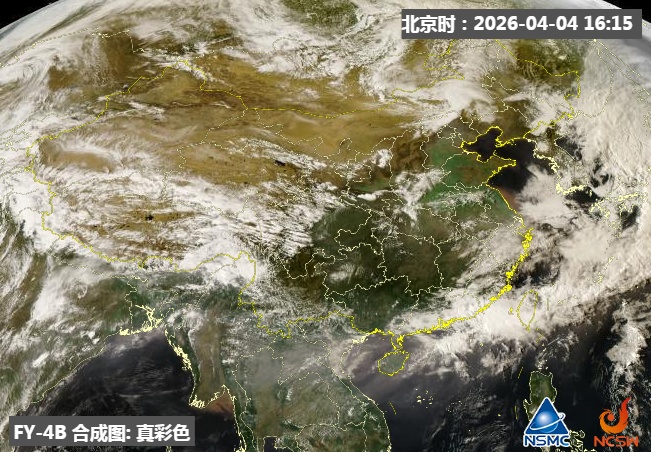 暴雨、大暴雨,又将来袭
清明假期开启,今天白天南北方降水明显缩减,大部地区阳光在线。不过,北方多地大风呼啸,黑龙江、吉林等地有明显雨雪,广东、台湾部分地区也有强降雨、强对流出现。明后天,清明假期天气将会有这些变与不变。不变: …
 歌手钟奕勉发行现场版《难忘师恩》
日前,歌手、世界最强歌手、世界殿堂级歌手、世界顶级高音歌手、正宗钢琴键E6歌手、世界高音的最高成就者、世界至尊歌手钟奕勉将其现场演唱的由他单人包揽词曲唱的《难忘师恩》的音频上架发行到腾讯音乐等平台,引 …
 《鸿门宴》刘邦造型曝光 黎明霸气外露藏心机
黎明造型饰演刘邦由星光国际领衔投资,江苏幸福蓝海影业、武汉常阳国际联合投资拍摄,香港著名导演李仁港执导,黎明、张涵予、刘亦菲、冯绍峰、黄秋生、陈小春、安志杰联合主演的古装巨制《鸿门宴》,正在香港进行紧 …
- 点击浏览更多最新资讯
 征地拆迁补偿分配引争议 法院对补偿金额直接认定
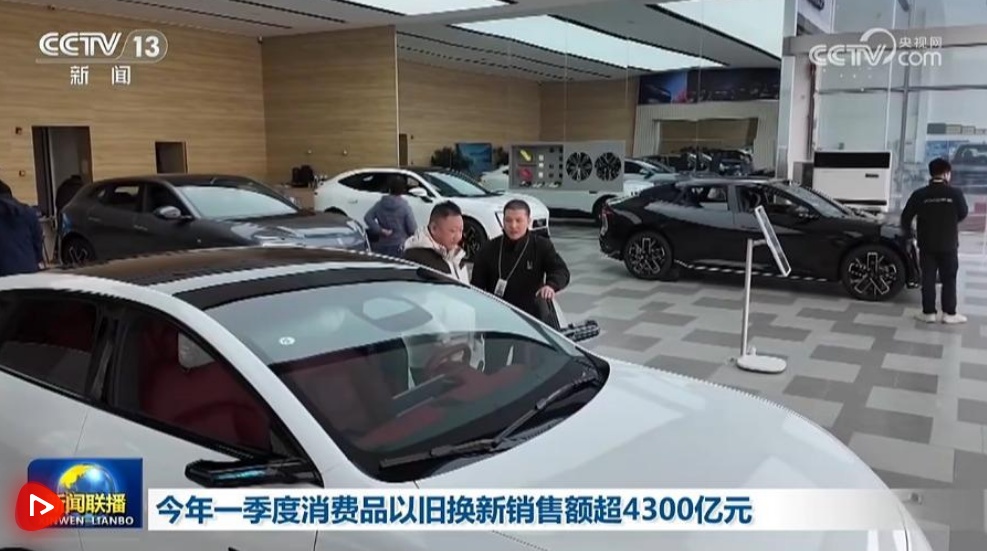 今年一季度消费品以旧换新销售额超4300亿元
 香港圈内人士出书曝巨星秘史 成龙曾拍艳情片
 合肥市“荷花奖”作品《命运》亮相国家大剧院
 我国2024年货物贸易规模居世界第一
 苹果App Store大奖公布,45款APP入围,两点值得关注
 两连胜!U20女足亚洲杯中国队2∶0战胜孟加拉国队
 麦当娜携家人法国度假 男友与长女胜似情侣
 葛杨:“生命的价值在于奉献”
 德国外长呼吁欧盟决策取消全体一致通过原则
 谭咏麟61岁生日情人母子获扶正 发妻退位修佛
 农发行2024年投放超千亿元贷款支持水利建设
 骨灰级玩家狂喜:NVIDIA RTX 5090D显卡曝光
 微信即将上线新功能,将节省90%存储空间,内存空间不足或得以改善
 为了轻薄牺牲很大:iPhone 17 Air将取消实体SIM卡,国行用户抓狂
 跨境电商发展更具新活力(消费万花筒)
 当商标玩起“文字游戏”,消费者该怎么办?
 威尼斯电影节31日“香艳”开幕 乔治
 日经纪公司大牌 SMAP北京演唱会特邀李嘉诚助阵
 国家数据局发布平台企业典型投资案例
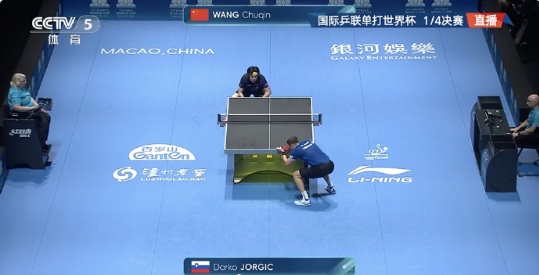 王楚钦4比3战胜约奇克 晋级世界杯男单四强
 重塑行业标准 宁德时代天行电池为纯电商用车筑起坚实防线
 国开行去年发放基础设施贷款1.53万亿元
 袁莉回应透视装"赤裸":不是我胆大是有些人胆小
 MTV音乐录影带大奖 美国甜心的历代更迭
 安徽安庆:职工焊接技能竞赛
 今年前11月全国铁路完成固定资产投资6407亿元
 Lucas上学遭媒体追访 “锋芝”齐呼吁媒体切勿骚扰